

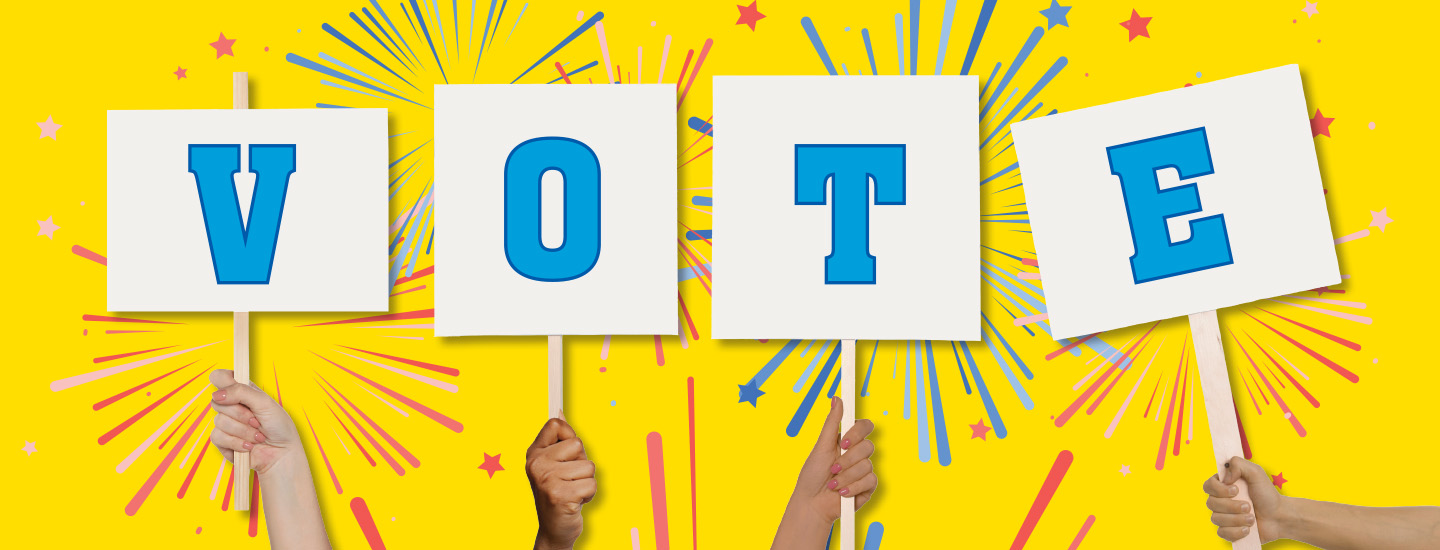

Four hands each hold a sign with one letter that together spell Vote

Shutterstock.com 

STANDARDS

NCSS: Power, Authority, and Governance • Civil Ideals and Practices

Social Studies/ELA: Cite text evidence and make inferences, conduct research

Standards

U.S. NEWS | CIVICS

Your Guide to the Midterms

This fall’s elections will decide which political party controls Congress. Here’s what you need to know.

Campaign ads are all over the internet and TV. Pamphlets and brochures arrive in the mail. And candidate banners and yard signs line the roadsides. 

On November 3, Americans will head to the polls to vote in the midterm elections. Those are nationwide elections that take place midway through a president’s four-year term. Federal, state, and local candidates will all be on the ballot.

The winners of the biggest races will have the power to make changes that affect everything from the cost of groceries to the quality of the air you breathe. And many political experts say the local races matter just as much as the federal ones.

“There are a lot of important races going on in people’s home states that are going to affect policies they really care about day-to-day, like education funding and roads,” explains Barry Burden. He is the director of the Elections Research Center at the University of Wisconsin-Madison.

Voters have to be at least 18 for most elections, but you can still get involved. First, find out what’s at stake. Then make your voice heard on the issues you care about. This guide will get you started.

Carol Yepes/Getty Images

The donkey represents the Democratic Party. The elephant represents the Republican Party.

Who’s on the ballot?

Many positions in the U.S. Congress, the lawmaking branch of the government, are up for grabs. Most of them are in the House of Representatives. Its members serve two-year terms, so all 435 seats will be decided. In the Senate, 35 of the 100 seats will be on the ballot. That’s because senators serve staggered six-year terms, with about one-third up for election at a time.

Voters in 36 states will elect governors. People across the country will also fill more than 6,000 state lawmaker seats. And they’ll decide on local and county officials as well.

In other words, a lot is at stake. With the exception of president, “essentially every major [elected] office is on the ballot,” Burden says. 

Most of the candidates in these races belong to the country’s two main political parties, the Democratic Party and the Republican Party.

Why are the midterms important?

Midterm elections are seen as “report cards” for the president. How people feel about the performance of President Donald Trump, a Republican, may influence how they vote this fall.

History is not on Trump’s side. The sitting president’s party has lost seats in Congress in 20 of the past 23 midterm elections. 

“Often, the voters don’t give the president a very good grade, and that leads them to support the other party,” explains Kyle Kondik. He is an elections expert at the University of Virginia’s Center for Politics. 

Trump’s average approval rating among Americans was hovering near 34 percent late this summer, so many experts say the current political environment favors Democratic candidates. 

But other experts point out that election outcomes are hard to predict, and support for Trump is strong within his party. His approval rating among Republicans was about 80 percent in August.

What You Need to Know About Congress
Watch a video to learn about the lawmaking branch of the U.S. government.

Why do races for Congress get so much attention?

The races for the House and Senate often dominate the national news because their results have a major impact on how the federal government is run.

The party with the majority in each chamber gets to set the agenda for what lawmakers discuss and can focus on certain bills over others. That means the party in charge can support the president’s goals—or not.

Right now, Republicans hold slim majorities in the House and Senate (see graphs, below). Democrats are hoping to take control of both chambers in November. The magic number to win a majority in the House is 218 seats. In the Senate, it is 51 seats.

Both parties are expected to hold on to most of the seats they currently have in the House and Senate. As a result, the control of Congress will likely be determined by a few dozen competitive races across the country.

Congress Today

HOUSE

  • 218 Republicans
  • 212 Democrats
  • 4 Vacancies 
  • 1 Independent*

*Usually votes with the Republicans

SENATE

  • 53 Republicans
  • 45 Democrats
  • 2 Independents**

**Usually vote with the Democrats

SOURCE: Congress.gov, August 2026

Alex Holland/Westend61/Getty Images

Congress meets in the U.S. Capitol. The building has more than 600 rooms!

What issue are voters focused on?

The economy is one of the biggest issues voters are paying attention to. Nearly 3 in 10 Americans are most concerned about high prices, taxes, and the economy overall, according to a Pew Research Center poll.

Grocery prices have mostly risen over the past six years, and the cost of gasoline has jumped by about $1 a gallon since the U.S. war with Iran started in February. Voters want to hear how candidates would lower costs. But Pew reports they are equally split over which party they trust more to address the issue. 

Main Issues

This infographic shows what voters would most like to hear congressional candidates talk about.

Economy: 29%

Government ethics and reform*: 9% 

*Ensuring fairness and efficiency in government

Immigration: 7%

Health care: 5%

Note: Based on registered voters, July 6-12, 2026. Only issues that made up 5 percent or more of responses are shown.

SOURCE: Pew Research Center

January 3

The date the new Congress must meet for the first time, per the 20th Amendment. However, lawmakers can vote to change the date. It falls on a Sunday in 2027.

SOURCE: Congress.gov

87% 

Share of midterm elections since 1934 in which the president’s party has lost seats in Congress

SOURCE: The American Presidency Project

How might the results affect the rest of Trump’s presidency?

If Republicans maintain control of Congress, the rest of Trump’s term could be very similar to the first half, many experts predict.

If Democrats win control of either chamber, it could be harder for Trump to carry out his agenda. They could use a House or Senate majority to block proposed laws they disagree with. And they could pursue their own goals, such as expanding voting rights. 

Whatever the outcome, political experts say the end of the midterm elections will clear the way for the nation’s next major contest—the 2028 presidential race. 

YOUR TURN

Conduct Research

Use the map above to find out which races are taking place in your state. Then research a candidate who is running for one of those positions. What experience do they have? What issues are they focusing on?


Interactive Quiz for this article

Click the Google Classroom button below to share the Know the News quiz with your class.

Download .PDF
Skills Sheets (6)
Skills Sheets (6)
Skills Sheets (6)
Skills Sheets (6)
Skills Sheets (6)
Skills Sheets (6)
Lesson Plan (2)
Lesson Plan (2)
Text-to-Speech