

Jim McMahon/Mapman®
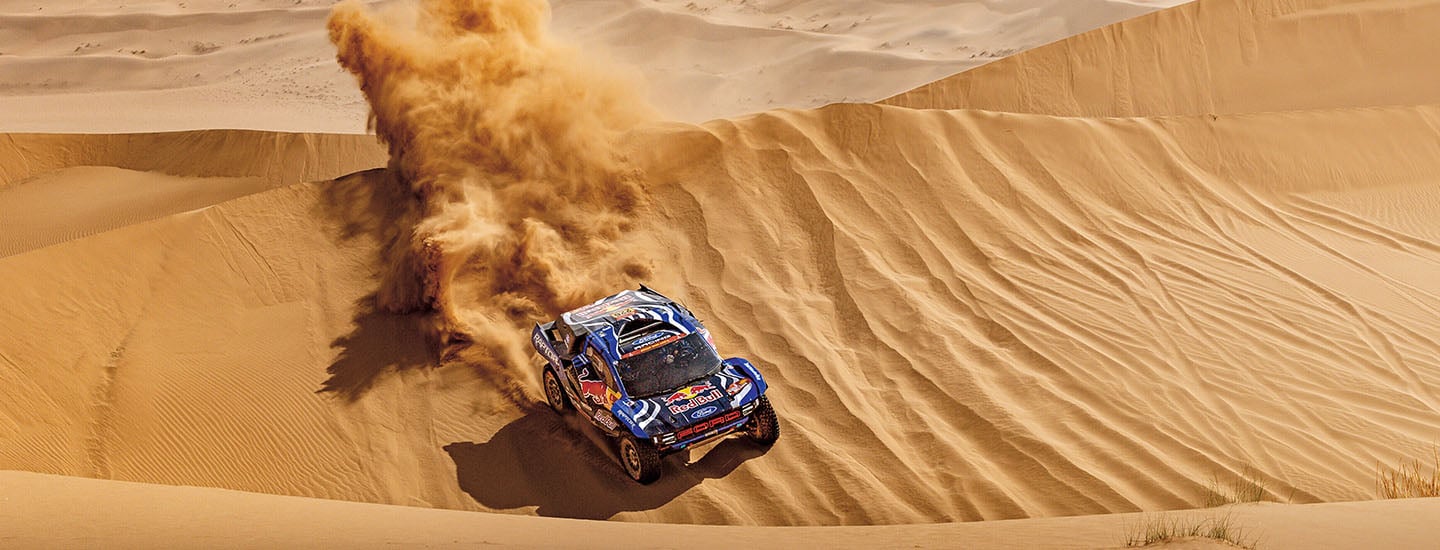
Barreling over dunes. Navigating around rocks. Steering through sand. Competitors in the Dakar Rally have to be ready for all of it—and more. They even have to dodge camels!
Often called the world’s toughest off-road race, the annual rally has been pushing drivers to the limit for nearly half a century. This year’s race took place in January. Drivers traveled across almost 5,000 miles of rocky and desert terrain in Saudi Arabia in just 15 days. The course started and ended in Yanbu, a coastal city along the Red Sea.
More than 800 people from dozens of countries entered, driving everything from cars and trucks to motorcycles and four-wheeled off-road vehicles called side-by-sides. They raced during the day, repairing their vehicles at night.
Drivers traveled up to 12 hours a stretch without stopping. They had to constantly stay focused to avoid crashing when the terrain changed. And they had to navigate without a map of the route. Instead, they received a digital roadbook of step-by-step instructions five minutes before starting each leg of the race.
The rally was also physically difficult. Traveling up to 105 miles per hour, racers jostled their backs and necks riding on rocky terrain and got nauseous zooming up and down steep sand dunes. Others pushed through dehydration.
Still, the thrill of the challenge is worth it, many racers say. Luciano Benavides of Argentina finished in 49 hours and 41 seconds to win the motorcycle division in January’s race. He beat out his nearest competitor by two seconds. “You’re training for a race that cannot be replicated,” he told a reporter. “Nobody sees the risks you take.”
—Laura Anastasia