
Question: What are microplastics? How do they get into our air, water, and soil?
Question: What are microplastics? How do they get into our air, water, and soil?
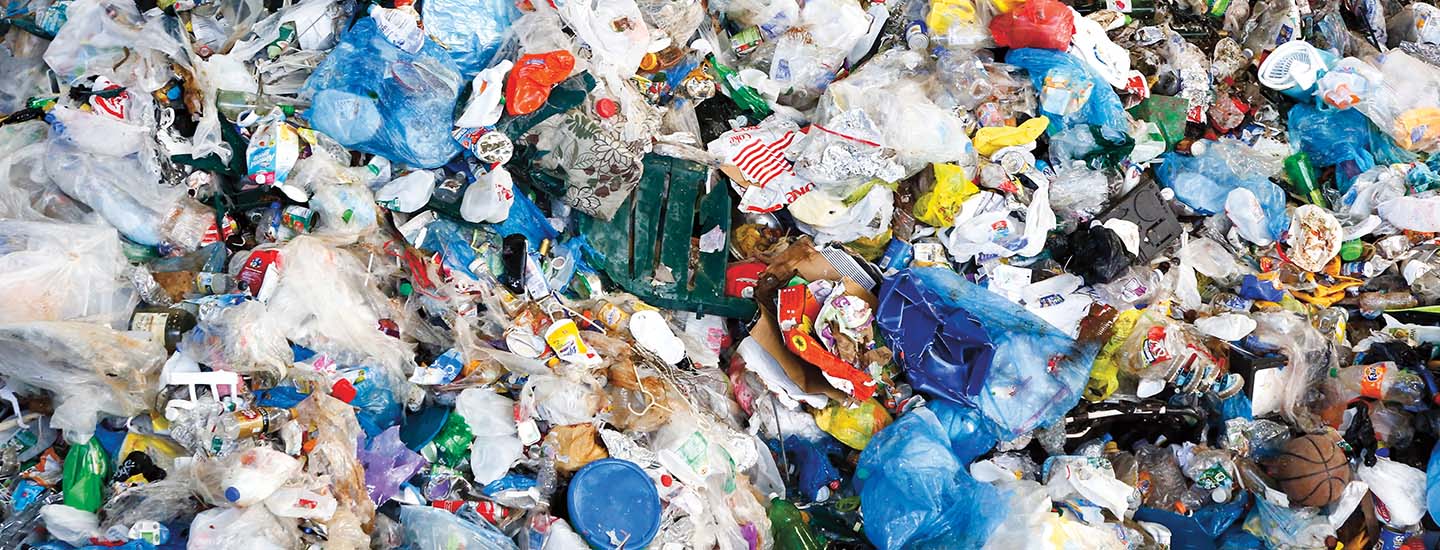
The average American throws away nearly 300 pounds of plastic a year.
Julien McRoberts/Tetra images RF/Getty Images
STANDARDS
NCSS: People, Places, and Environments
Common Core: R.5, R.7

WORLD NEWS
The Plastic Problem
Plastic trash doesn’t go away. It just breaks down into tiny pieces that end up in the soil, oceans, and air. How does that affect us—and what can we do about it?
Question: What are microplastics? How do they get into our air, water, and soil?
Question: What are microplastics? How do they get into our air, water, and soil?
The bus is almost here and you have to hurry. You grab a yogurt for breakfast, slip your phone in a pocket, and quickly tie your shoes. Cramming notebooks and folders into your backpack, you race out the door.
Your day has barely begun, but you’ve already used or touched plastic dozens of times. The material is in everything from food packaging and school supplies to phones and even clothes.
But plastic isn’t only in the objects you can see. Over time, the material breaks down into microplastics—tiny pieces typically smaller than a sesame seed. And those pieces eventually turn into nanoplastics, which are too small to see with the human eye. Experts say both types of plastic are just about everywhere on Earth—in the air, water, and soil. They’ve even been found in snow at the top of Mount Everest and in the breath of a bottlenose dolphin.
The bus is almost here. You have to hurry. You grab a yogurt for breakfast and slip your phone in a pocket. You quickly tie your shoes. Then you cram notebooks and folders into your backpack. You race out the door.
Your day has barely begun. But you have already used or touched plastic dozens of times. The material is in everything from food packaging to school supplies. It is in phones and even clothes.
But plastic is not only in the objects you can see. Over time, the material breaks down into microplastics. Those are tiny pieces typically smaller than a sesame seed. And those pieces eventually turn into nanoplastics. Those are too small to see with the human eye. Experts say both types of plastic are just about everywhere on Earth. They are in the air, water, and soil. They have been found in snow at the top of Mount Everest. They are even in the breath of a bottlenose dolphin.
Shutterstock.com
Over time, plastic breaks down into tiny pieces called microplastics.
What does that mean for humans? Scientists are racing to figure out how microplastics affect our bodies and our health. Meanwhile, officials in the United States and other countries are trying to reduce the amount of plastic that companies make and people throw away. Here’s how we got to this point—and what you can do about it.
What does that mean for humans? Scientists are racing to figure out how microplastics affect our bodies and our health. Meanwhile, officials in the United States and other countries are trying to reduce the amount of plastic that companies make and people throw away. Here is how we got to this point. Find out what you can do about it.
Plastic Takes Over
It might seem like plastic has been around forever, but it is actually a relatively new material. A Belgian American chemist named Leo Baekeland first invented plastic in 1907. The material is mostly made from oil and other fossil fuels.
In the U.S., the plastic industry took off during World War II (1939-1945). Steel and other materials were in short supply, so plastic was used for everything from parachutes to airplane windows. The material was lightweight, strong, and inexpensive to produce.
After the war, manufacturers began making plastic products for consumers. By the 1950s, the material was a staple in toys, dishes, electronics, and more. Demand for plastic has only risen since. To meet it, companies now produce more than 474 million tons of plastic worldwide each year, according to the United Nations Environment Program.
It might seem like plastic has been around forever. But it is actually a relatively new material. Leo Baekeland first invented plastic in 1907. He was a Belgian American chemist. The material is mostly made from oil and other fossil fuels.
In the U.S., the plastic industry took off during World War II (1939-1945). Steel and other materials were in short supply. So plastic was used for everything from parachutes to airplane windows. The material was lightweight, strong, and inexpensive to produce.
After the war, manufacturers began making plastic products for consumers. By the 1950s, the material was a staple in toys, dishes, electronics, and more. Demand for plastic has only risen since. To meet it, companies now produce more than 474 million tons of plastic worldwide each year. That is according to the United Nations Environment Program.
Long-Lasting Effects
But in recent decades, scientists have discovered a massive downside to the material—plastic can take up to 1,000 years to disintegrate. And it is difficult and expensive to repurpose, so only about 9 percent of the plastic produced since the 1950s has ever been recycled. Single-use plastic packaging, like water bottles and food wrappers, is especially hard to recycle. That packaging makes up about 40 percent of all plastic produced today.
Most plastic waste ends up as trash in landfills or litter in the ocean. Over time, sunlight and water break down plastic into microplastics. Those can contaminate the soil and water or be eaten by animals.
But in recent decades, scientists have discovered a big downside to the material. Plastic can take up to 1,000 years to disintegrate. And it is difficult and expensive to repurpose. So only about 9 percent of the plastic produced since the 1950s has ever been recycled. Single-use plastic packaging is especially hard to recycle. It is used for things like water bottles and food wrappers. That kind of packaging makes up about 40 percent of all plastic produced today.
Most plastic waste ends up as trash in landfills or litter in the ocean. Over time, sunlight and water break down plastic into microplastics. Those can contaminate the soil and water. They can be eaten by animals.
BY THE NUMBERS
397 million tons
Amount of plastic waste generated globally a year; most ends up in landfills and oceans, where it breaks down into microplastics
SOURCE: Statista
Amount of plastic waste generated globally a year; most ends up in landfills and oceans, where it breaks down into microplastics
SOURCE: Statista
287 pounds
Amount of plastic discarded yearly by the average American
SOURCE: The National Academies
Amount of plastic discarded yearly by the average American
SOURCE: The National Academies
Where Ocean Microplastics Come From
35%: Synthetic textiles (polyester clothing, fishing nets)
28%: Tires
24%: City dust
7%: Road markings (paint from crosswalks and lane lines)
3.7%: Marine coatings (protective paint on boats)
2%: Personal care products
0.3%: Plastic pellets (beads used to make plastic items)
SOURCE: International Union for Conservation of Nature
35%: Synthetic textiles (polyester clothing, fishing nets)
28%: Tires
24%: City dust
7%: Road markings (paint from crosswalks and lane lines)
3.7%: Marine coatings (protective paint on boats)
2%: Personal care products
0.3%: Plastic pellets (beads used to make plastic items)
SOURCE: International Union for Conservation of Nature
But plastic also breaks down while we are still using it. For example, plastic water bottles left in the sun for a long time can release chemicals into the water. Tires shed tiny bits of plastic as people drive. Many clothes are also made from plastic. Human-made fabrics like polyester and nylon release plastic fibers when people wash or wear them. Wind and water then transport these plastic pieces around the globe.
But plastic also breaks down while we are still using it. For example, plastic water bottles left in the sun for a long time can release chemicals into the water. Tires shed tiny bits of plastic as people drive. Many clothes are also made from plastic. Human-made fabrics like polyester and nylon release plastic fibers when people wash or wear them. Wind and water then transport these plastic pieces around the globe.
Jordi Chias/NaturePL.com
Sea turtles can get entangled in plastic fishing nets.
A Human Toll
Microplastics also accumulate in our bodies—through the air we breathe and the food we eat. The pieces have been found in human blood and waste. They’ve also been discovered in our organs, including the liver, kidneys, and brain. In fact, researchers at the University of New Mexico have detected plastic at higher levels in the brain than in other organs. Their findings show that the average human brain contains the same amount of plastic used to make a disposable spoon.
Other researchers have linked exposure to microplastics to certain health issues. But a lot still remains unknown. Scientists are trying to determine how long microplastics stay in the body. They also want to figure out how much plastic has to be inside us for our health to be affected.
“This is the big global question,” says scientist Matthew Campen. He leads the University of New Mexico lab involved in the brain research. “We don’t know when critical health effects really start to emerge.”
Microplastics also accumulate in our bodies. This happens through the air we breathe and the food we eat. The pieces have been found in human blood and waste. They have also been discovered in our organs. That includes in the liver, kidneys, and brain. In fact, researchers at the University of New Mexico have detected plastic at higher levels in the brain than in other organs. Their findings show that the average human brain contains the same amount of plastic used to make a disposable spoon.
Other researchers have linked microplastics exposure to certain health issues. But a lot remains unknown. Scientists are trying to determine how long microplastics stay in the body. They also want to figure out how much plastic has to be inside us for our health to be affected.
“This is the big global question,” says scientist Matthew Campen. He leads the University of New Mexico lab involved in the brain research. “We don’t know when critical health effects really start to emerge.”
A Teen on a Mission
Erin Daniels
Cash Daniels recycles plastic fishing line.
Cash Daniels, 16, has an ambitious goal: to clean up plastic pollution. The Tennessee teen got started when he was just 7 years old. He spotted a plastic straw in the sand on a family trip to Daytona Beach, Florida, and was concerned that it would end up in the water. “I made the connection that the plastic straw might harm those animals,” he says.
Back home, Cash did some research and learned that plastic in the ocean often gets there from rivers. The Tennessee River, which flows through his hometown of Chattanooga, is one of the world’s most plastic-polluted rivers.
Cash has led river cleanups ever since—gathering people to remove litter from in and around the water. He also sets up recycling bins for plastic fishing line. His efforts have removed more than 45,000 pounds of trash.
Cash hopes other kids and teens will act too. “Anyone can get outside and pick up a piece of plastic,” he says.
Cash Daniels, 16, has an ambitious goal: to clean up plastic pollution. The Tennessee teen got started when he was just 7 years old. He spotted a plastic straw in the sand on a family trip to Daytona Beach, Florida, and was concerned that it would end up in the water. “I made the connection that the plastic straw might harm those animals,” he says.
Back home, Cash did some research and learned that plastic in the ocean often gets there from rivers. The Tennessee River, which flows through his hometown of Chattanooga, is one of the world’s most plastic-polluted rivers.
Cash has led river cleanups ever since—gathering people to remove litter from in and around the water. He also sets up recycling bins for plastic fishing line. His efforts have removed more than 45,000 pounds of trash.
Cash hopes other kids and teens will act too. “Anyone can get outside and pick up a piece of plastic,” he says.
Taking Action
By 2040, the amount of plastic pollution we create a year is expected to nearly double—to 679 million tons worldwide. (Just how much is that? Consider this: The Statue of Liberty weighs 225 tons.)
World leaders are trying to prevent that big increase from happening. The United Nations is currently negotiating a treaty between 175 countries that would help reduce plastic pollution.
Meanwhile, many nations have passed laws targeting plastic waste. More than 90 countries, including China, France, and Kenya, and territories, including Puerto Rico, have banned single-use plastic bags. The European Union has made it illegal to sell some single-use plastic items, including plates and straws. And the U.S. and several other countries have barred companies from making products with plastic microbeads. Those are tiny pieces of plastic found in certain cosmetics and lotions.
By 2040, the amount of plastic pollution we create a year is expected to be 679 million tons worldwide. That is nearly double what it is now. (Just how much is that? Consider that the Statue of Liberty weighs 225 tons.)
World leaders are trying to prevent that big increase from happening. The United Nations is currently negotiating a treaty between 175 countries that would help reduce plastic pollution.
Meanwhile, many nations have passed laws targeting plastic waste. More than 90 countries have banned single-use plastic bags. That includes China, France, and Kenya. Territories like Puerto Rico have banned them too. The European Union has made it illegal to sell some single-use plastic items, like plates and straws. And the U.S. and several other countries have barred companies from making products with plastic microbeads. Those are tiny pieces of plastic found in certain cosmetics and lotions.
More than 500 U.S. cities have implemented plastic bag bans.
U.S. states are also getting in on the action. Twelve states and more than 500 cities have implemented plastic bag bans. Fourteen states have barred single-use plastic in other forms—from Styrofoam takeout containers to mini bottles of shampoo at hotels. And at least seven states are holding companies accountable. They have passed laws requiring companies that manufacture plastic to pay for the cost of recycling their products.
U.S. states are also getting in on the action. Twelve states and more than 500 cities have implemented plastic bag bans. Fourteen states have barred single-use plastic in other forms. That includes things like Styrofoam takeout containers and mini shampoo bottles at hotels. And at least seven states are holding companies accountable. They have passed laws requiring companies that manufacture plastic to pay for the cost of recycling their products.
Every Little Bit Helps
Even with these actions, scientists say microplastics won’t go away anytime soon. More than 9 billion tons of plastic has been produced since the 1950s, and most of it is still around. “Even if we stop making plastics today, we will have a continued increase of micro- and nanoplastics in the environment for generations to come,” Campen explains.
That’s why individuals need to step up and help too, experts say. Using fewer plastics—especially single-use items—can help reduce your exposure to microplastics and prevent plastic pollution before it starts.
Campen, for one, keeps reusable takeout containers in his car in case he goes out to eat and has leftovers. When it comes to fighting microplastics, he says, even small changes can make a difference.
These actions help. But scientists say microplastics will not go away anytime soon. More than 9 billion tons of plastic has been produced since the 1950s. And most of it is still around. “Even if we stop making plastics today, we will have a continued increase of micro- and nanoplastics in the environment for generations to come,” Campen explains.
That is why individuals need to step up and help too, experts say. Use fewer plastics, especially single-use items. That can reduce your exposure to microplastics. And it can help prevent plastic pollution before it starts.
Campen, for one, keeps reusable takeout containers in his car. That helps if he goes out to eat and has leftovers. He says that when it comes to fighting microplastics, even small changes can make a difference.
What You Can Do
Here are some ways to cut down on plastic waste and lower your exposure to microplastics.
YOUR TURN
Take the Plastic Challenge!
Keep track of how much single-use plastic you use in a day. Then report back to your classmates and compare your results. Discuss: What are two or three small actions you can take to use fewer single-use plastic items?
Keep track of how much single-use plastic you use in a day. Then report back to your classmates and compare your results. Discuss: What are two or three small actions you can take to use fewer single-use plastic items?
Interactive Quiz for this article
Click the Google Classroom button below to share the Know the News quiz with your class.
Download .PDF