

Jim McMahon/Mapman®
How close would you get to an erupting volcano? Mount Etna—Europe’s largest and most active volcano—has been flaring up for thousands of years. That includes fiery eruptions this past December and January that triggered weeks of volcanic activity. But new rules about visiting the volcano are creating a different kind of firestorm.
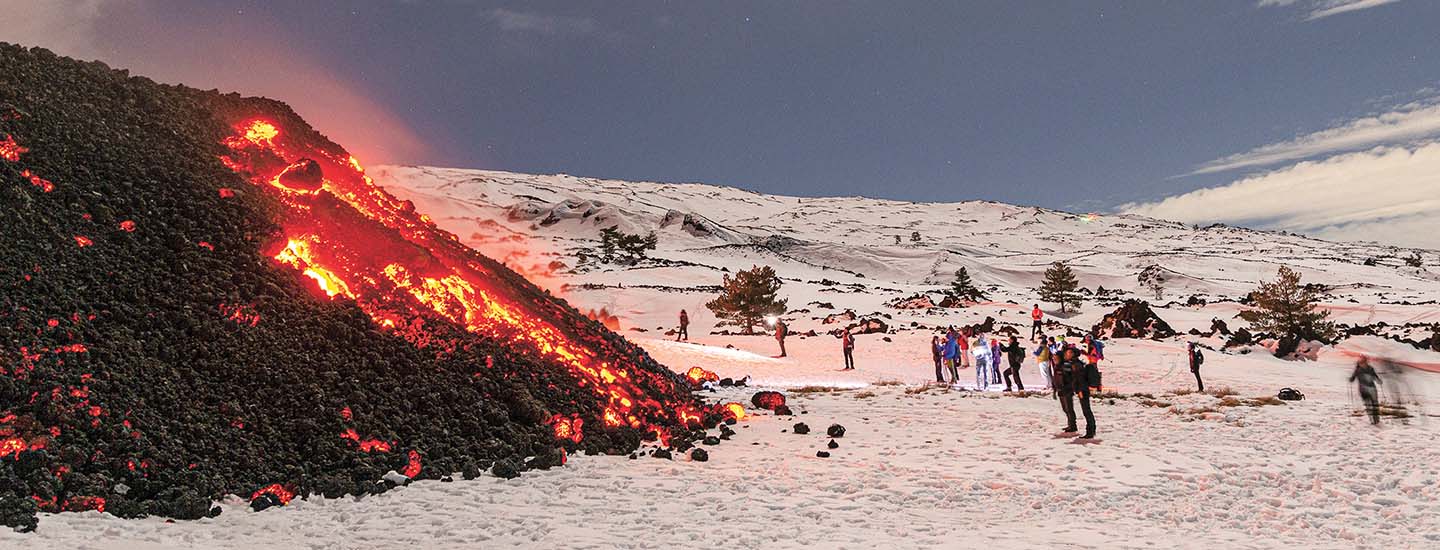
Located on the Italian island of Sicily, Etna is a big draw for tourists. In response to those recent eruptions, however, local officials imposed new rules that require visitors to stay at least 660 feet away from Etna’s lava flows. Those are rivers of molten rock that flow down the volcano. The rules also prohibit tours after dusk, which locals say is the best time to view the lava.
The local government claims the limits are necessary to keep people safe from Etna’s blasts, which can be unpredictably strong. For example, a large eruption this past June rained down molten rock and ash, forcing tourists to flee.
But professional tour guides in Sicily say the rules are unreasonable. The guides make a living by taking visitors on tours that often include trekking near lava flows. The excursions are safe, the guides argue, because the groups only go near lava that is moving very slowly.
The tour guides went on strike in January to protest the rules. They hope to reach a compromise with authorities that protects their jobs—and lets tourists safely have a blast.
—Lisa M. Herrington